
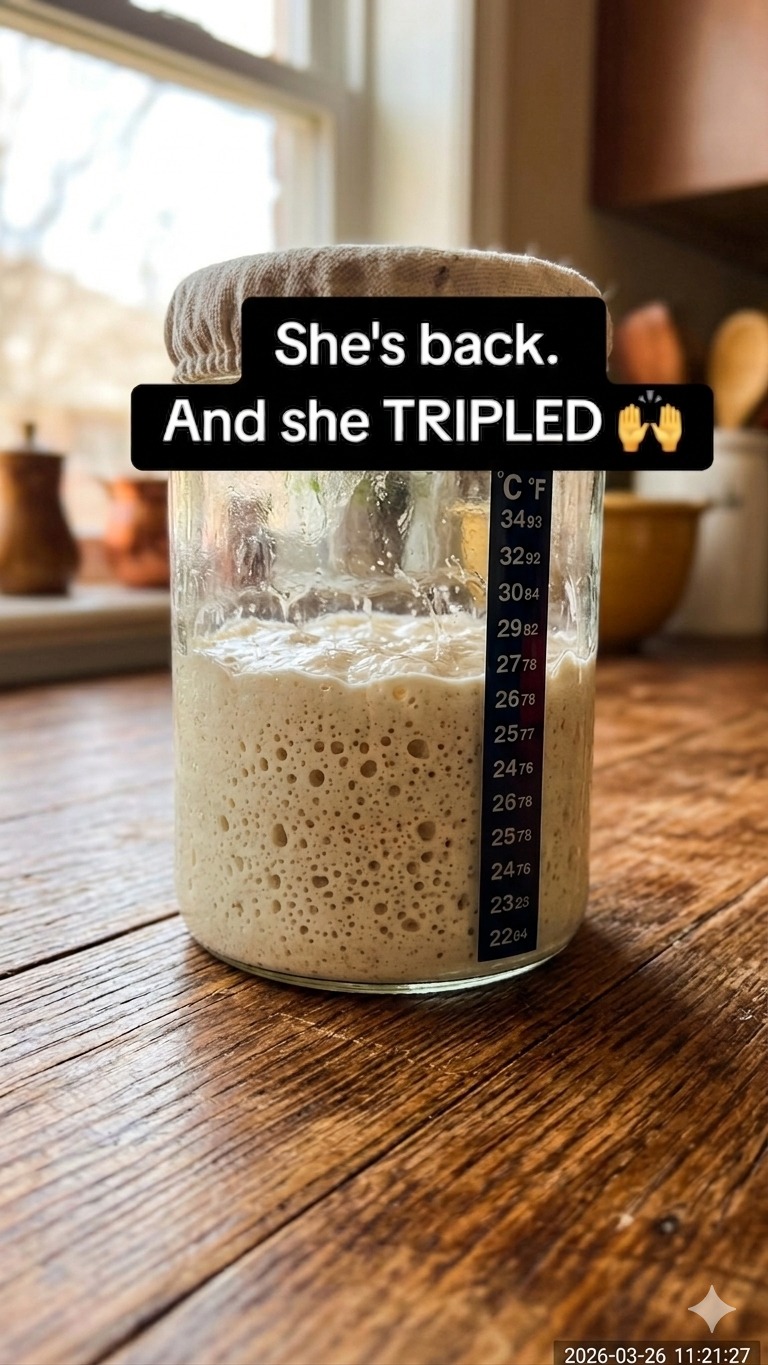
Life happens. The starter gets pushed to the back of the refrigerator, forgotten for a week — or four. When you finally open the jar, you find a dark, pungent liquid sitting on top, a deflated mass below, and possibly a faint but unpleasant smell. It looks dead. It probably isn't.
Sourdough starters are extraordinarily resilient. The wild yeasts and bacteria that make them work have evolved over millennia to survive periods of dormancy, starvation, and neglect. In almost every case, what looks like a dead starter is just a very hungry one.
Reading the Signs
Before you start any revival protocol, take a moment to assess what you're actually dealing with.
- Dark liquid on top (hooch) — This is alcohol produced by the yeast as it runs out of food. It looks alarming but is completely normal. It means the starter is starving, not dead.
- Gray or dark color throughout — Also normal for a long-neglected starter. It will lighten with feeding.
- Sour or vinegary smell — A good sign. It means acetic acid bacteria are present and active.
- Fuzzy mold (pink, orange, or black spots) — This is the one situation where you discard and start from scratch. Green mold can sometimes be scraped if it's surface-only and the starter below smells fine, but pink or orange contamination means the starter is compromised.
If there's no mold, your starter is almost certainly revivable. Pour off the hooch (or stir it back in — both are fine), and begin the protocol below.
The 7-Day Revival Protocol
This method rebuilds microbial activity gradually, allowing the healthy bacteria and yeast to outcompete anything undesirable that may have taken hold during the dormant period.
Ratio Guide
The feeding ratio you use matters. A 1:1:1 ratio (starter : flour : water, equal parts) produces a faster, more acidic starter because the bacteria have more to eat relative to the dilution. A 1:5:5 ratio produces a milder, slower starter with more yeast character. During revival, stick to 1:2:2 or 1:1:1 to maximize activity.
Flour Type and Water Quality
Chlorinated tap water can inhibit yeast activity. If your revival is stalling, switch to filtered water or leave tap water uncovered overnight to let the chlorine dissipate.
Unbleached all-purpose flour is the workhorse. Adding 10–20% whole wheat or rye flour during revival accelerates things significantly due to the higher mineral and enzyme content. You don't have to keep it in the long-term feed — just use it during the first 3 days.
Preventing Future Neglect
- Keep it in the refrigerator if you bake less than once a week. Cold storage slows activity to the point where one feeding per week is sufficient.
- Label your jar with the last feeding date. A masking tape label on the lid takes five seconds and prevents the guessing game.
- Maintain a small amount. 50–100g is plenty for a home baker. Large volumes need more flour to maintain and produce more discard.
- Dry a backup. Spread a thin layer of active starter on parchment paper, let it dry completely, crumble it into flakes, and store in a sealed container. Dried starter can last years and can be rehydrated in an emergency.
Your starter is not fragile. It has survived everything you've thrown at it so far, and it will continue to do so. The relationship between a baker and their starter is one of the most patient and forgiving ones in the kitchen. Feed it, and it feeds you back.