
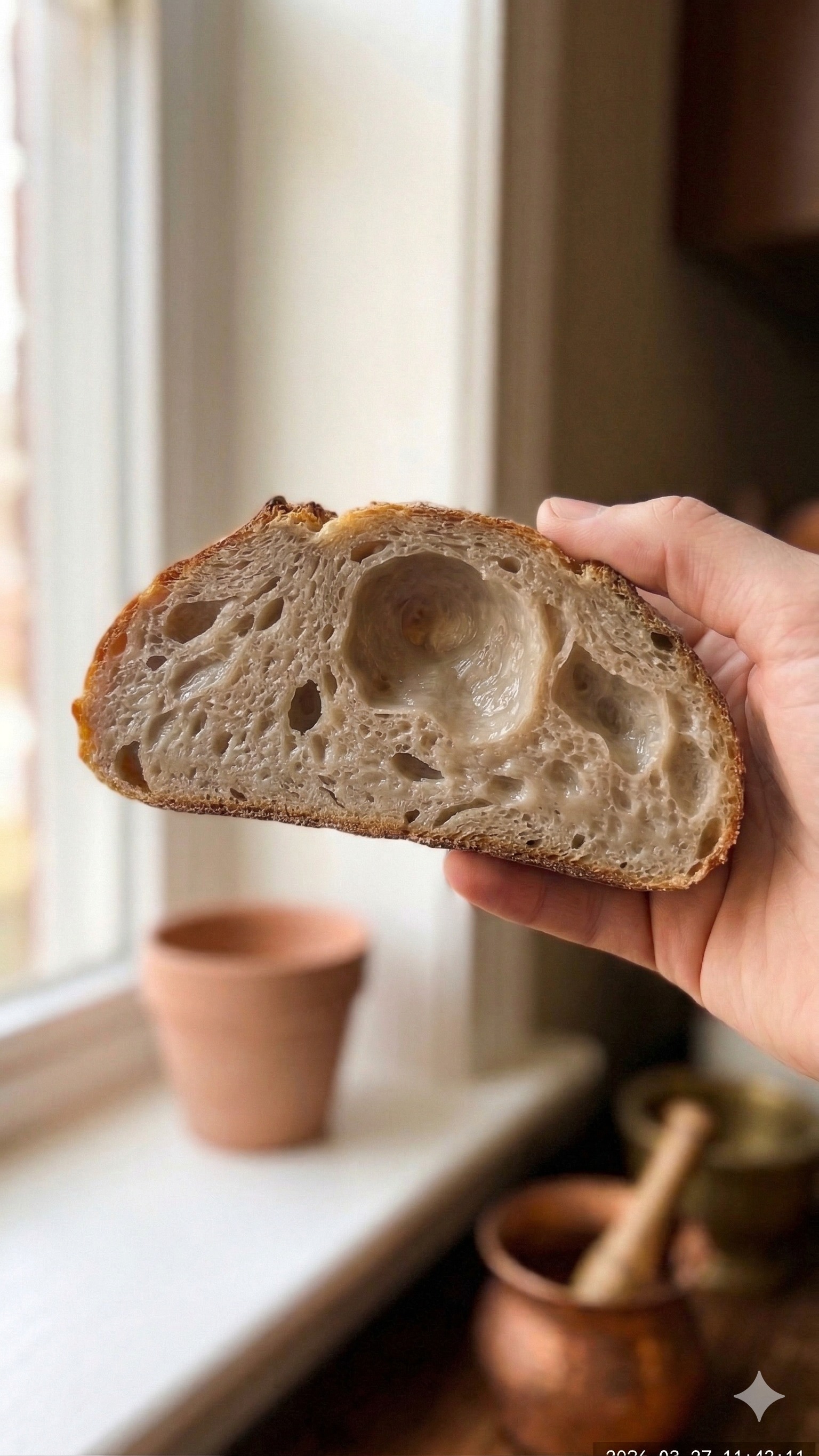
You waited. You were patient. The loaf came out of the oven deep brown and crackling, it filled the kitchen with the right smell, and you let it cool (mostly). Then you sliced it — and the crumb was dense, wet, and gummy. It stuck to the knife. It tore instead of cut cleanly. It had the texture of undercooked dough despite clearly being baked.
This is one of the most common sourdough problems, and it usually comes down to one of two things: the loaf wasn't fully baked, or it wasn't given enough time to cool.
The Internal Temperature Rule
The color of the crust tells you almost nothing about whether the interior is done. A sourdough loaf can have a dark, beautiful crust and still be completely raw inside if the oven temperature was too high and the outside set before the heat could reach the crumb.
The only reliable way to know if a loaf is fully baked is to check the internal temperature with a probe thermometer.
At 206°F (97°C), the starches inside the bread have fully gelatinized and set. Below this temperature, they remain partially liquid, which is exactly what creates that gummy, pasty texture. Insert your probe thermometer into the side of the loaf toward the center — not from the bottom or top — and wait for the reading to stabilize.
If the reading is below 200°F (93°C), return the loaf to the oven (without the Dutch oven lid) for 5–10 more minutes and check again.
The Cooling Rule
Even a perfectly baked loaf will have a gummy crumb if you slice it too early. This is the most common mistake home bakers make, and understandably — after 24 hours of fermentation and 45 minutes of baking, the temptation to slice immediately is almost unbearable.
But the bread is still baking as it cools.
When the loaf comes out of the oven, the interior is still at 200°F+ and full of steam. As the loaf cools on a wire rack, that steam gradually redistributes and escapes through the crust. The crumb sets and firms. The texture that was almost-done when the loaf left the oven becomes fully done during the first hour of cooling.
- Minimum cooling time: 45 minutes for a standard 900g loaf
- Ideal cooling time: 1.5–2 hours for the best crumb texture and cleanest slices
- For the very best crumb: wait until fully cooled (3–4 hours) — the flavor also deepens as the loaf reaches room temperature
A loaf sliced at 20 minutes will almost always seem gummy compared to the same loaf sliced at 90 minutes. The bread isn't gummy — it's just unfinished.
Other Causes Worth Checking
Over-Fermentation
A dough that over-fermented before baking will produce a dense, gummy crumb regardless of bake time and cooling. The gluten breaks down, the gas structure collapses, and the internal structure never sets properly. If you're hitting the right temperature and cooling correctly but still getting gummy bread, look at your fermentation timing. See the rise troubleshooting guide for diagnosing over-fermentation.
Too Much Whole Grain Flour
Whole wheat and rye flours absorb more water initially, but the bran also weakens gluten over time. High-percentage whole grain doughs can seem gummy because the crumb structure is inherently denser and less able to set cleanly. If you're using more than 30% whole grain, adjust expectations for crumb openness and add 5 minutes to your bake time.
Oven Temperature Too High
Counterintuitively, an oven that's too hot can produce a gummy crumb. The crust sets and browns rapidly, but the inside never reaches the temperature it needs because the outer shell acts as insulation. This is why so many recipes call for covering the loaf for the first 20 minutes and then reducing the temperature slightly for the remainder of the bake.
The Fix at a Glance
- Use a probe thermometer and bake to 206–210°F internal temperature
- Cool on a wire rack for a minimum of 1 hour before slicing
- If the loaf seems done but the internal temp is too low, return to the oven uncovered
- If you suspect over-fermentation, review your bulk fermentation timing and starter health
A probe thermometer is one of the lowest-cost, highest-impact tools a home baker can own. It removes all the guesswork from one of the most frustrating sourdough problems. If you don't have one, get one before your next bake.