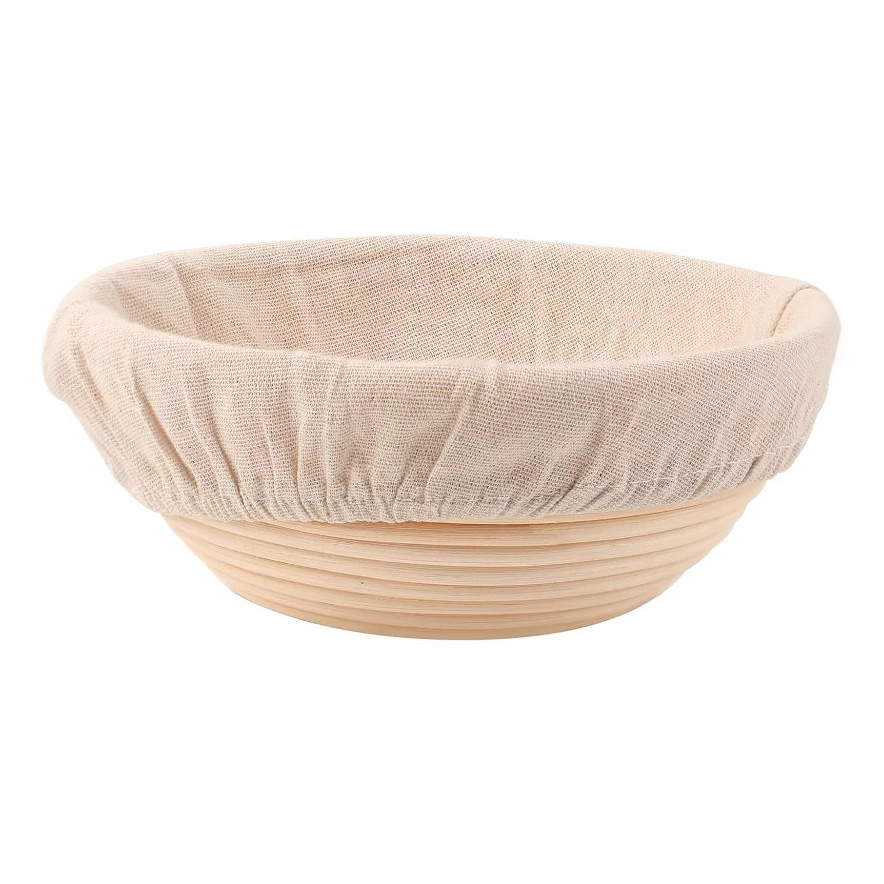
What It Is
A banneton, also called a proofing basket or brotform, is a basket, usually made from rattan cane or wood pulp, that holds your shaped sourdough dough while it does its final rise (called “proofing”). You’ve probably seen those gorgeous loaves with beautiful spiral patterns on the crust; that’s the banneton’s signature! They come in round shapes (for boules) and oval shapes (for batards), so you can choose based on the style of loaf you love most.
Why It Matters
Once you’ve shaped your dough, it still needs time to proof before baking usually anywhere from a couple of hours at room temperature to overnight in the fridge. Without support during this rise, your dough would just spread out flat on the counter. The banneton gently cradles your loaf, helping it keep its shape and rise upward instead of outward. The porous material also wicks away just enough moisture from the surface of the dough, which gives you that beautifully crisp, crackly crust you’re going for.
How to Use It
Start by dusting your banneton generously with a mix of rice flour and all-purpose flour. Rice flour is the magic ingredient here. It doesn’t absorb into the dough the way regular flour does, which means your loaf won’t stick. Place your shaped dough seam-side up into the basket (so the smooth, pretty side is facing down and will become the top of your loaf when you flip it). Cover it lightly with a damp kitchen towel or plastic wrap, then let it proof according to your recipe, either at room temperature for a few hours, or covered in the fridge overnight for a slow, flavor-developing cold proof.
When you’re ready to bake, place your baking vessel (like a Dutch oven) nearby, flip your banneton confidently over it in one smooth motion, and your dough will release right onto the surface. Then score and bake!
Tips & Tricks
Don’t be shy with the flour when you’re first starting; a little extra dusting is your best friend against sticking. Rice flour truly makes a difference, so if you don’t have it yet, it’s worth picking up. If you’re doing an overnight proof in the fridge, place the whole banneton (covered) directly in there. The cold temperature slows fermentation and builds incredible flavor. Also, don’t worry if your first few loaves don’t release perfectly; it just takes a little practice to get the hang of the flip!
How to Care for It
Never wash your banneton with soap or submerge it in water this can damage the fibers and cause mold to grow. After each use, let it dry out completely at room temperature (a few hours or overnight). Once it’s fully dry, use a stiff brush or a clean pastry brush to knock out any dried bits of flour. Now and then, you can place it in a low oven (around 200°F / 93°C) for 10–15 minutes to fully dry it out and kill any lingering bacteria. Store it somewhere with good airflow, not sealed in a bag.
