
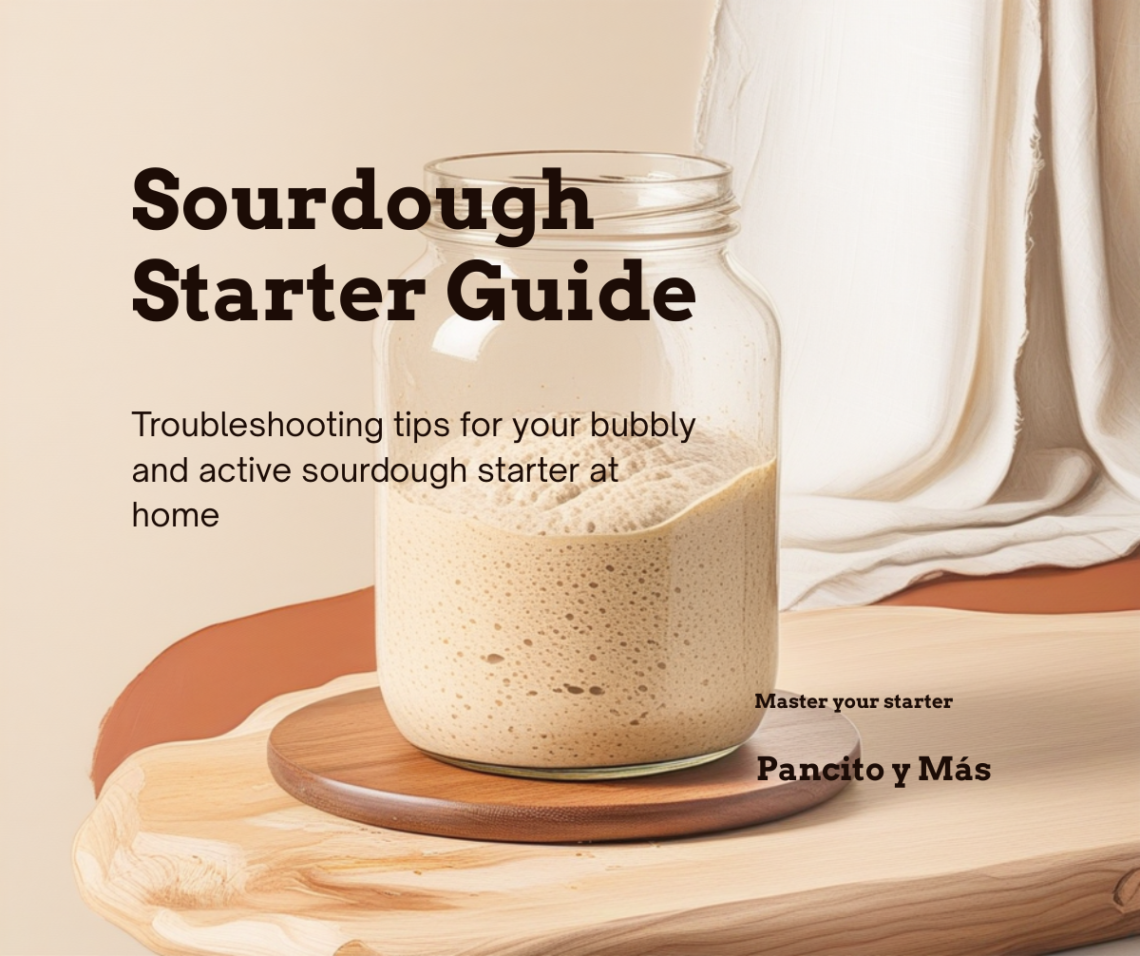
You mixed flour and water, waited patiently, and… nothing. Or maybe your starter was active last week and now it looks flat and sad. Don’t panic — this happens to every sourdough baker. Here’s how to diagnose and fix the most common sourdough starter problems.
Problem 1: My starter isn’t rising at all
Likely cause: It’s too cold, or it’s too new. Wild yeast is temperature-sensitive — below 65°F (18°C) activity slows dramatically. If your starter is under 7 days old, it simply needs more time. Keep it somewhere warm (70–78°F is ideal) and be patient. A new starter can take 10–14 days before you see reliable activity.
Fix: Place it on top of your refrigerator, near a warm appliance, or inside your oven with just the light on. Use lukewarm water (85°F) when feeding instead of cold tap water.
Problem 2: There’s liquid on top of my starter
What it is: That grey or dark liquid is called “hooch” — it’s alcohol produced when your starter is hungry. It’s not harmful, just a sign your masa madre needs feeding.
Fix: Pour off the hooch (or stir it back in for a more sour flavor), then feed your starter with fresh flour and water. If this keeps happening, increase your feeding frequency — try twice a day instead of once.
Problem 3: My starter smells bad
Normal smells: Tangy, vinegary, slightly funky, like beer or yogurt — all normal. A healthy starter changes smell throughout the day depending on where it is in its cycle.
Bad smells: If it smells like nail polish remover (acetone), it’s very hungry — feed it immediately. If it smells like vomit or has pink/orange streaks, discard it and start fresh. That indicates contamination.
Problem 4: My starter is rising but my bread is still dense
Likely cause: You’re baking at the wrong time. Your starter needs to be used at peak activity — the moment when it has doubled in size and the dome on top is just starting to flatten. Too early or too late and you’ll get a dense loaf.
Fix: Do the float test — drop a small spoonful of starter into water. If it floats, it’s ready to bake with. If it sinks, give it more time.
Problem 5: I keep forgetting to feed my starter
Life gets busy. The good news: you can store your starter in the refrigerator and only feed it once a week. When you’re ready to bake, take it out the night before, feed it, leave it at room temperature overnight, and it will be ready to use in the morning.
Want a foolproof starter from day one?
The Pancito y Más Complete Sourdough Starter Kit includes a 50-page Sourdough Bootcamp guide with a full 7-day starter plan, feeding schedule, and troubleshooting section — so you always know exactly what to do next.
Still stuck? Drop your question in the comments or tag us on TikTok @pancitoymas — we answer every single one.